
How Much Xylitol Do You Actually Need for Cavity Protection? (Part 3)
Posted by Donald Bailey on Jan 16th 2026
If you've tried xylitol and thought...
- "I chew a piece sometimes... isn't that enough?”
- “I bought the ‘xylitol’ gum… and I’m still getting cavities.”
- “Maybe this stuff is overhyped?”
You’re probably using too little, and probably not often enough.
That’s the most common reason xylitol “doesn’t work.” It’s not because xylitol can't help. It's not because you lack discipline. It’s likely because your daily dose never get high enough to clobber acid-producing bacteria.
So, let’s put numbers on the board and end the guessing game.
Quick rewind: why xylitol matters (in the “Acid Loop” world)
In Part 1, we talked about the frustrating truth: brushing and flossing are important, but cavities are really created by what happens between brushings.
In Part 2, we explained in greater detail the challenges of the Acid Loop.
Eat → bacteria throw a party → acid goes up → enamel softens → repeat.
Cavities aren’t about one bad moment. They’re about repeated acid attacks.
Xylitol is useful because it helps you interrupt those acid attacks loop during the day, when your toothbrush isn’t the right tool for the job.
But (and this is the key): xylitol only helps if you use enough, often enough.
The target: 6–10 grams per day
Here’s the simple range that shows up again and again in practical guidance:
Aim for 6–10 grams of xylitol per day.
If you’re someone who “does all the right things” and still gets cavities, this is the range we’d start with.
And yes, most people are way under this. They buy a “xylitol gum” like Orbit or Trident that contains little more than a sprinkling of xylitol. Or they buy a gum like Epic, that is loaded with xylitol, but “chew one piece, once in a while.”
It’s like trying to put a house fire using a squirt gun. In the face of acid attacks multiple times a day, doses like these barely register.
Dose is only half the story; frequency is the cheat code
Here’s where people miss the point. They treat xylitol like a nice-to-have supplement. They take it once-in-a-while, randomly, or whenever they remember.
But your mouth isn’t a once-a-day kind of place.
Acid attacks plague your simile multiple times per day, especially if you snack, sip coffee over extended time periods, or graze.
That’s why xylitol works best when you split your daily dose into 3–5 exposures, usually after meals/snacks.
Think regular exposures to xylitol, not once-a-day “hero doses”.
The Acid Loop runs on repeat. You beat it with regular interruptions/resets.
“Cool. But what does 6–10 grams look like in real life?”
Let’s translate grams into something you can actually use.
Step 1: Find a xylitol gum with a meaningful dose.
Look on the ingredients list. If it is not the first ingredient listed, it’s only making a cameo appearance. You need a gum with enough xylitol to make a difference.
Pro tip – find a gum that will disclose the actual amount of xylitol per piece. Some brands use rounding tricks to fool you. If the piece size is at least 1.5 grams, and xylitol is the only sweetener, you’re in a good spot. For example, Epic has 1.06 grams of xylitol per piece.
Step 2: Build your daily total with small, repeatable “doses”
A simple pattern:
- 2g after breakfast
- 2g after lunch
- 2g after dinner
- Brush mornings and evening with a xylitol toothpaste
- Optional: 1–2g after a snack or coffee
That’s 6–10g/day without making your life weird.
Why delivery method and timing matters (more than people think)
Not all xylitol habits are created equal, because delivery method and timing changes three big things:
- How long it hangs out in your mouth
- If it interrupts the acid loop when acid attacks are happening
- Whether you’ll actually do it consistently
Here’s the practical breakdown:
1) Chewing gum
Why it’s great: longer contact time + saliva stimulation (saliva is your mouth’s built-in recovery system).
Best for: after meals, especially when you’re out living your life.
2) Mints / lozenges
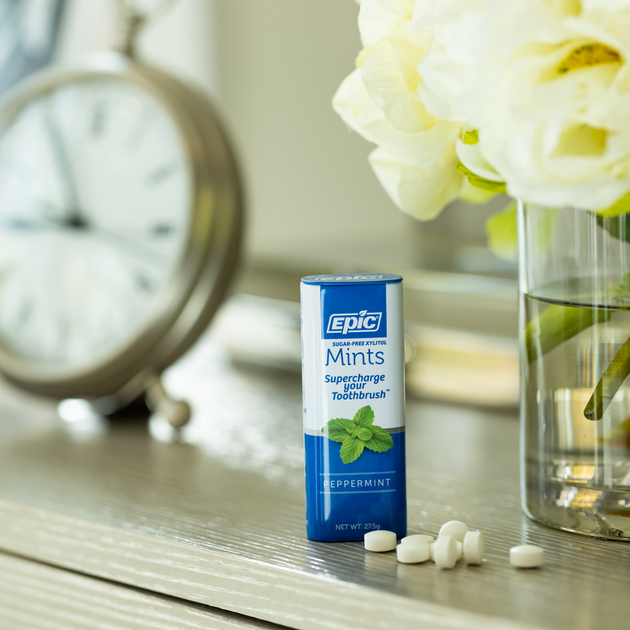
Why they’re great: easy, fast, discreet. They get our saliva flowing too. You typically need more frequent refreshes with the mints to get to your recommended 2 grams, 3-5 times per day.
Best for: meetings, car rides, school pickup lines, “I can’t chew gum right now.”
3) Toothpaste / mouthwash products that include xylitol
Why they help: extra support for the routine.
But: brushing once or twice a day doesn’t solve a problem that happens all day between meals.
Bottom line: if you’re trying to tame recurring cavities, you’ll see best results using xylitol gum or mints after meals. Switching to a xylitol toothpaste or mouthwash is a great idea, but usually not enough to move the needle alone.
Here’s a simple routine that helps you hit the target
The “Eat, Treat, Wait” Method
- Rinse with water immediately after eating.
- Use 2g of xylitol (gum or mints) right after eating.
- Wait 30–60 minutes before you brush.
That waiting period is crucial. It gives your enamel time to re-harden so you don’t brush it away.
That’s the whole enchilada. Here’s how to make it automatic:
The Strategic Stash Plan
Most people don’t struggle with this routine because they’re lazy. They struggle because their xylitol is in a place that requires effort.
- “Where did I put it?”
- “I’ll grab it later.”
- “Oh well… next time.”
The biggest upgrade you can make isn’t motivation. It’s placement.
If you want this game-changing routine to become automatic, put xylitol in the places where you eat, drive, work, and live.
Pick 2–3 of these spots (start small):
- Car stash: cupholder or center console
- Desk stash: top drawer or laptop bag
- Kitchen stash: on the counter or the cabinet you open every day
- Bag stash: purse, backpack, or diaper bag
- Coat stash: a permanent pocket supply (winter-proofing!)
Common questions (so you don’t have to overthink this)
“What if I only do xylitol once a day?”
Once a day is better than zero… but it usually doesn’t match the number of times the Acid Loop runs. If you want a real impact, frequency matters.
“Can I do more than 10g/day?”
Some people do, but studies suggest it’s not going to deliver better results. If you do, ramp up gradually. If you go from “none” to “a lot” overnight, your stomach may file a formal complaint. If you’re new: start lower, then build over a week.
“Is xylitol okay for kids?”
We’re going deeper on that in another post (including how to make it kid-simple). For now: yes, xylitol is commonly used in family routines, but dosage, age-appropriate forms, and supervision still matter.
“Any safety stuff I should know?”
Yes: dogs.
Like chocolate, grapes, macadamia nuts, etc., xylitol can be dangerous for dogs. Keep it out of reach like it’s medication. If you have a dog who raids purses or backpacks, take this seriously.
Bottom line: you don’t need dental superpowers—just the right dose + reps
Here’s the takeaway:
- Aim for 6–10g of xylitol/day
- Split it into 3–5 exposures
- Pick a delivery method (gum or mints) you’ll actually stick with
- Anchor it to meals with Eat, Treat, Wait Method
The Acid Loop runs on repeat after meals, snacks and sodas. Your job is to interrupt it often.
Catch up on the series:
- Part 1: Why brushing and flossing don’t stop cavities (and what actually does)
- Part 2: The Acid Loop explained: what’s really happening between meals